If you’re curious about your sleep quality or looking for ways to manage sleep, these tools may be helpful to some degree. How can you choose the best sleep trackers? This involves considering specific criteria based on what’s important to you. Examples of these criteria include:
- Sleep tracking metrics range from heart rate and sleep interruptions to room temperature and noise level
- Sleep analytics, such as sleep changes over time, daily activity levels, and sleep quality
- Personal comfort, such as wearing a device vs. using mattress sensors
- Features, such as a smart alarm or the ability to integrate with other apps
- Battery life
Top sleep tracking tools
You’ll find different types of sleep trackers on the market. Some of the most notable include the following:
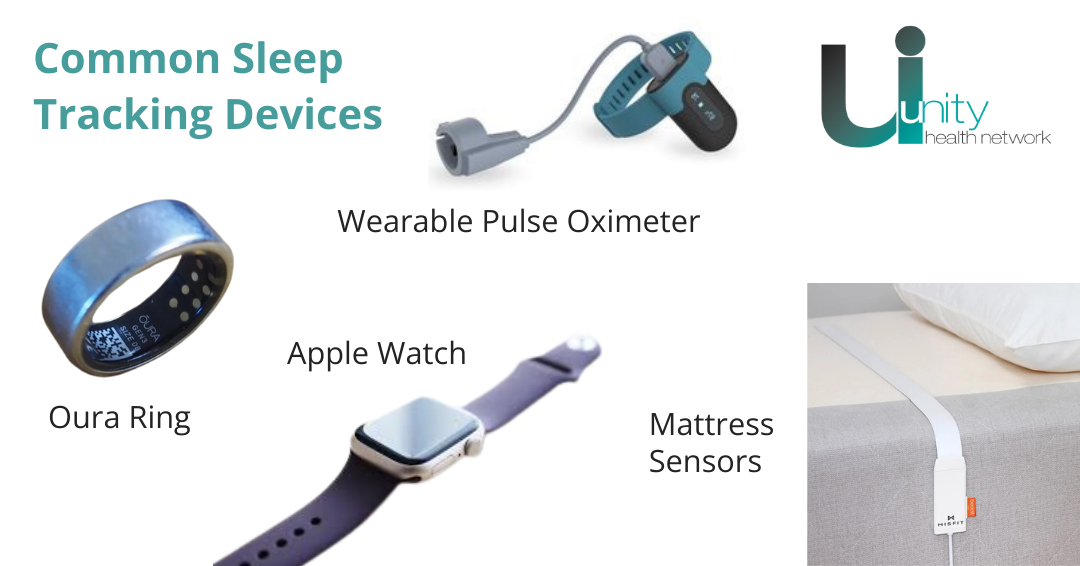
- Wearable devices, such as Oura Ring and Apple Watch, have built-in sensors for gathering sleep data
- Bedside devices with contactless sensors for measuring breathing patterns and body movements
- Mattress-based sensors placed under mattresses or smart mattresses with sleep-tracking technology
Let’s look at two of the most popular sleep trackers — the Oura Ring and the Apple Watch. The Oura Ring’s features include the ability to measure blood oxygen saturation, snoring intensity, sleep interruptions, heart rate, and creating rate. The Apple Watch can measure blood oxygen levels, sleep patterns, and heart rate. The latest Apple Watch will include features for measuring snoring, body movements, respiratory rate, and other data related to sleep apnea.
Both devices can provide some insight into sleep quality. For example, they can help you see if you spend most of your time in light sleep with frequent interruptions, which may be a sign of sleep apnea. However, as with other sleep-tracking tools, the data might be inaccurate. Consult your doctor if you suspect that you might have sleep apnea.